There's a piece doing the rounds this week about Salesforce's announcements at Dreamforce. The short version: enterprise software is quietly giving up its monopoly on the interface. Instead of forcing every employee through the Salesforce screen, the company is opening its data, workflows and permissions to whatever AI interface people are actually using, Claude, Slack, wherever. The screen becomes optional. What's underneath becomes the whole game.
It's an enterprise software story, but the same shift is coming for every business with a website, and most people haven't clocked it yet.
The web is getting a second audience
For twenty years, a website had one job: convince a human to trust you enough to click. Every design decision, every headline, every hero image, was built for a person scrolling and deciding in seconds.
That's no longer the only audience. AI agents are already searching, comparing and shortlisting on people's behalf, quietly, in the background, before a human ever lands on your site. Ask an AI assistant to find you a structural engineer, a branding studio, a decent accountant, and it isn't judging your typography. It's reading your content, your structure, your claims, and deciding whether you're worth surfacing at all.
Your next customer might not see your website before they've already decided you're in the running. Or out of it.
Aesthetics still matter. They're just not doing the job alone anymore
This isn't an argument against good design. A beautifully built site still earns trust the moment a human does arrive, and it always will. But looking good has quietly stopped being sufficient. An AI agent can't be charmed by a nice gradient or a clever hover state. It's parsing meaning: what you do, who you do it for, what makes you different, and whether that story is consistent everywhere it looks.
That's not a design problem. It's a brand clarity problem, and it's been osmil's whole argument long before AI agents entered the picture.
What agents actually read
Strip away the interface layer and what's left is structure, semantics and consistency. The things that make a site genuinely legible to a machine are the same things that make a brand genuinely legible to a person:
- A clear, consistently worded proposition, not five slightly different versions across the homepage, the about page and LinkedIn
- Content that actually says what you do, rather than gesturing at it with abstract nouns
- A site architecture that reflects how you actually think about your business, not a template someone else built
- Proof and specificity, real clients, real outcomes, not vague claims dressed up as confidence
A business with scattered messaging and an inconsistent identity was already losing human trust. Now it's losing machine trust too, for exactly the same reason: it's unclear.
Brand alignment is becoming a technical advantage
This is the part that should reframe how businesses think about branding altogether. Brand alignment, having your identity, your messaging and your digital presence properly joined up, used to be a nice-to-have. A polish job. Now it's closer to infrastructure. If your brand isn't aligned, an AI agent parsing your site sees the same confusion a human would: mixed signals, unclear positioning, nothing to confidently recommend.
Clarity was always the differentiator. It's just got a new audience that rewards it even faster than humans do.
What to actually do about it
You don't need to panic-rebuild your website. You need to get honest about whether your brand is actually clear, everywhere it shows up.
- Say what you do in one sentence, and use that sentence everywhere
- Make sure your website structure matches how a client would actually describe your service, not how your industry jargon describes it
- Audit your site for contradictions, different tone, different claims, different priorities across pages
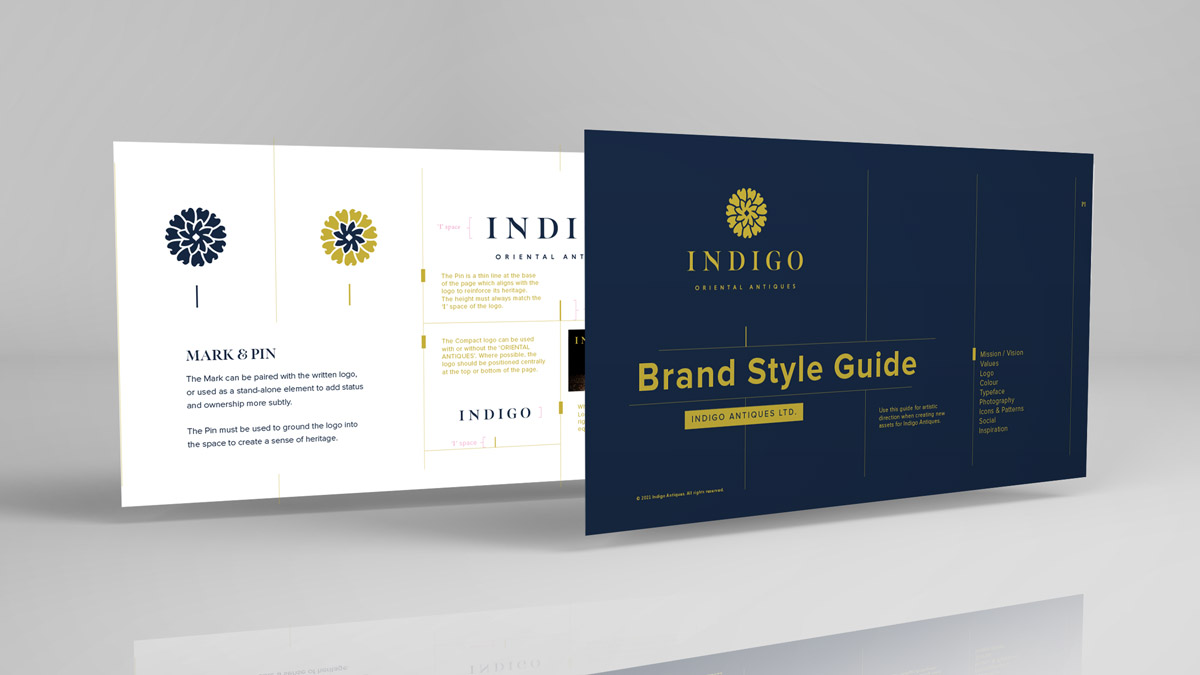
- Treat your brand identity as a system, not a logo. Systems are what both humans and agents can actually follow
This is precisely what brand identity work and ongoing brand guardianship are for, keeping a business's story consistent enough that anyone, or anything, trying to understand it gets the same answer every time. If you want a proper look at how your website and brand identity are actually holding up under that kind of scrutiny, that's a conversation osmil™ is set up to have.
The interface is becoming optional. Clarity isn't.