When people talk about brand identity, the focus often lands on the visible parts. The logo, the colours, the website. But in practice, the most important piece of work often sits quietly behind the scenes.
The brand guidelines. The brand bible. The single reference point that holds everything together and gives a business confidence in how it shows up.
For future-ready businesses, this document isn’t an afterthought. It’s the foundation that allows a brand to grow, adapt, and stay consistent as more people become involved in shaping it.
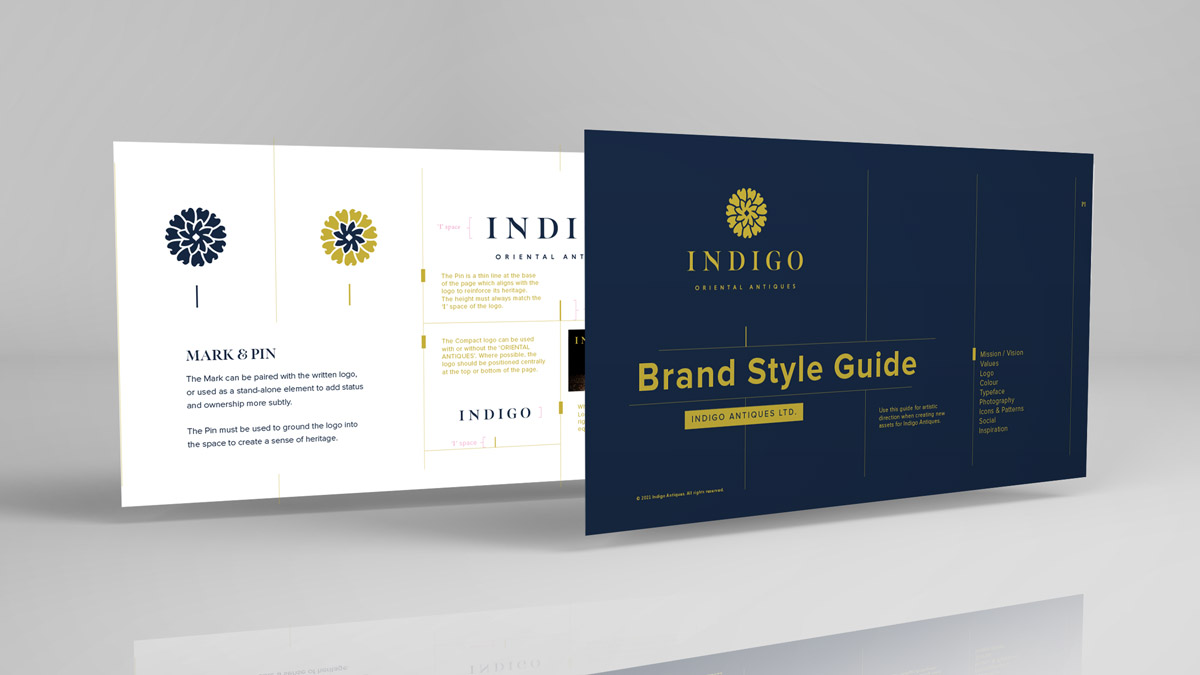
This was especially true for Indigo Antiques. As a business rooted in heritage, craft, and a deep understanding of its category, Indigo didn’t need reinvention. What it needed was clarity. A way to protect what made the brand special, while giving the team confidence to present it consistently across every touchpoint, now and in the future.
Our brief was to create a brand identity system that felt considered, elegant, and timeless, without becoming static or overly precious. Central to that work was the brand guideline document itself. Not as a rulebook, but as a living reference that could be used day to day by the team, partners, and collaborators. Something that felt as carefully crafted as the business it represented.
A good brand bible does more than explain how things should look. It explains why they look that way. It captures tone of voice, visual intent, hierarchy, and behaviour in a way that feels coherent and usable. For Indigo Antiques, the document brought together typography, colour, layout, imagery, and application in a way that felt calm and confident, reflecting the brand’s knowledge and authority without ever shouting.
What makes this kind of document powerful is the effect it has on people inside the business. When teams have a clear reference point, decisions become easier. There’s less second-guessing, fewer debates about taste, and more confidence in moving forward. The brand stops feeling fragile and starts feeling dependable. That confidence radiates outward, into customer experience, communication, and trust.
In Indigo’s case, the brand guidelines became a tool for alignment. They helped ensure that whether the brand appeared online, in print, or through direct customer interactions, it felt consistent and intentional. The team knew what good looked like, and more importantly, why it looked that way. That understanding is what allows a brand to evolve without losing its core.
For any business looking to be future-ready, this document matters more than ever. As teams grow, as new tools enter workflows, and as more voices contribute to how a brand is expressed, clarity becomes the difference between coherence and confusion. A well-made brand bible doesn’t restrict creativity. It supports it. It gives people the confidence to act, knowing they’re building on something solid.
The Indigo Antiques project is a good reminder that the most valuable brand assets aren’t always the most visible ones. Sometimes, the document that quietly sits behind the work is the thing that makes everything else feel easier, stronger, and more assured. For businesses that care about longevity, confidence, and quality, that makes it the number one brand document worth investing in.