You've done the hard work. You understand the client's problem, you've shaped a solution that makes sense, priced it sensibly, and you genuinely believe you're the right fit. The idea is solid. The thinking is there.
Now imagine sending a deck that matches it. One that looks considered, feels confident, and tells the room, before you've said a word, that you take this seriously. That's what great presentation design does. And it's more achievable than most people think.
A great idea deserves a great stage
Design in presentations isn't decoration. It's communication. It's the thing that guides a reader through your thinking in the right order, that reinforces your brand at every turn, that strips out the noise so the ideas have room to land.
When a presentation is working properly, it does some of the selling before you've opened your mouth. It creates a visual hierarchy that puts weight behind the right moments. It gives the whole thing a coherence that quietly signals, we know what we're doing. And it gives the person presenting it a confidence that's hard to fake any other way.
The best pitches we've worked on at osmil™ aren't the ones with the most content. They're the ones where the story is clear, the design is clean, and the whole thing feels like it came from one place.
The maths are simple
If you're pitching for a £50,000 contract and a professionally designed presentation costs £1,500 to £3,000, you don't need to win many times for that investment to pay back. You need to win once.
The difference between winning and losing often comes down to which proposal felt more credible, more considered, more like it came from a team who'd bring that same rigour to the actual work. A presentation that matches the quality of your thinking makes that case for you, before the conversation has even started.
The cost of losing a proposal is almost always higher than the cost of designing it properly. Every time.
"Can't I just use AI for this?"
Genuinely, I get why people ask. The tools are everywhere, they're improving fast, and the promise is compelling. Type in a prompt, get a polished deck in seconds. No designer, no brief, no cost.
And to be fair, if you need something internal, a quick team update or a rough first draft to think with, some of these tools are genuinely useful. Gamma is probably the most capable right now for speed and layout. Canva's AI features are accessible and familiar. Microsoft Copilot sits inside PowerPoint, which is convenient if that's already your world.
But here's where it gets interesting, and where most people don't think it through clearly enough.
AI tools can arrange information, but they struggle to shape a narrative. Effective presentations don't just transfer data, they move people. They change how a room thinks about a problem, a company, or a decision. That requires understanding your audience's motivations, their objections, and the emotional arc that will carry them from scepticism to belief.
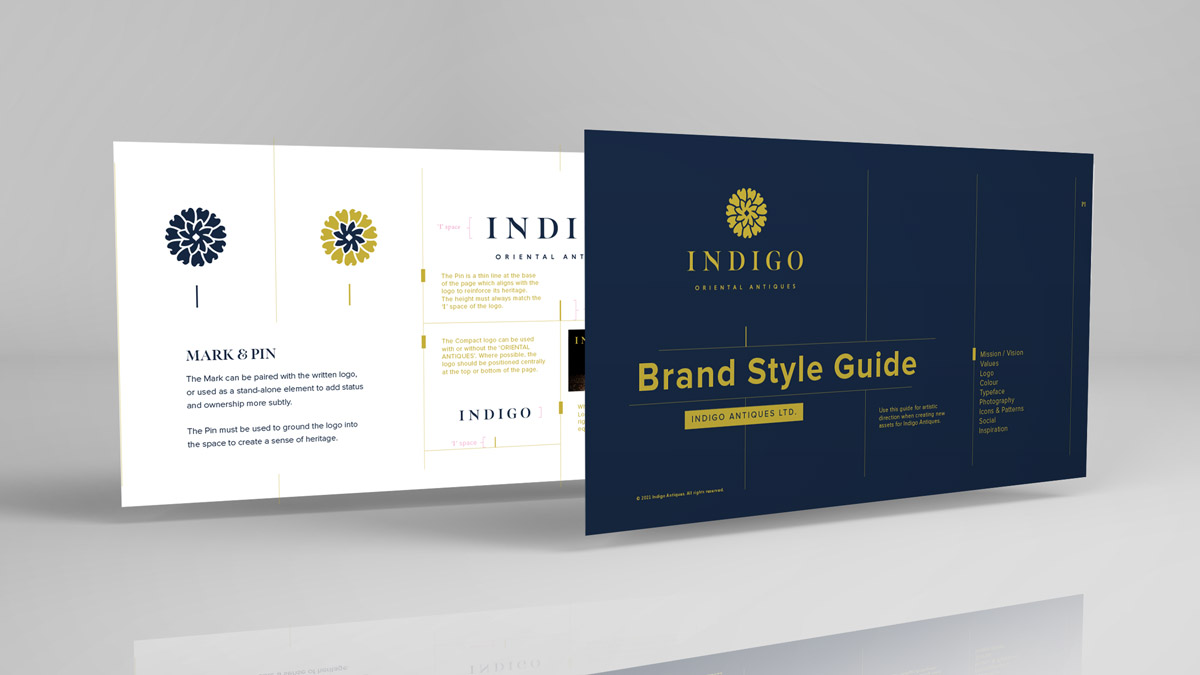
There's also the brand problem. AI presentation tools work from generic templates. They don't know your brand, your typeface, your colour system, your tone, or the very specific way your logo should sit on a dark background. They produce something that looks broadly professional, but broadly professional is not the same as distinctly yours. When it comes to brand-compliant, detailed presentations, they still fall short.
And then there's the sameness problem. Everyone using the same tools starts producing decks that look and feel the same. And that's a real problem when your presentation is supposed to differentiate you. If you're pitching against three other firms and all four decks were partially assembled by the same AI tools, you've already lost some of your edge before you've said a word.
The other thing nobody talks about openly is the prompt rabbit hole. People spend hours trying to get AI to produce something that looks right, tweaking and regenerating, only to end up with something that's still not quite there. That time has a cost too. And at the end of it, you've still got a deck that doesn't quite feel like you.
I use AI in my own work. But I use it as a thinking tool, not a design tool. There's a meaningful difference, and it shows up clearly in the finished product.
Working with osmil™ is easier than you'd think
This is the part I want to be straightforward about, because I think a lot of businesses assume working with a designer is going to be complicated, time-consuming, or expensive relative to the alternatives. In our experience, it's none of those things.
We work with Marketing Directors, founders, and leadership teams who are busy and don't want to over-explain themselves. So we don't make them. We get into the content with you, understand the story you're trying to tell, and take it from there. You don't need a lengthy brief or a detailed design specification. You need to tell us what you're pitching, who you're pitching to, and what winning looks like. We handle the rest.
We work within your existing brand, or help you sharpen it if it's not quite where it needs to be. We move at a pace that suits real business timelines, not agency ones. And the result is a deck you're genuinely proud to send, one that does the work before you've even walked into the room.
Presentations are one of our core services at osmil™, and we bring the same rigour to them as we do to brand identity and website projects. Because in a lot of cases, a pitch deck or board presentation is the brand. It's what lands in front of the most important room in the relationship. It deserves to be treated that way.
For businesses who pitch regularly
If presentations are a regular part of how you win and retain business, it's worth thinking about a more joined-up arrangement.
osmil™ offers Brand Guardianship, an ongoing studio partnership that gives you consistent, quality design output without the overhead of briefing a new supplier every time. Every deck, every document, every touchpoint stays on brand and on standard. You're never scrambling the night before a big pitch trying to make something presentable. And over time, the work gets better because we understand your business more deeply.
It's the kind of arrangement that pays for itself quickly, and tends to become something clients wonder how they managed without.
The bottom line
Your idea deserves to be seen properly. The thinking you've put into a proposal or a pitch deserves a presentation that matches it. The gap between a good idea and a winning one is often smaller than people think, and design is frequently what closes it.
AI can help you think. It can help you draft. But it can't replace the judgment, the brand fluency, and the craft that goes into a presentation that genuinely performs. That part still needs a human who knows what they're doing.
If you'd like to talk through what you're working on, we'd love to hear from it. Take a look at our presentation design service at osmil.io/services/presentations, or just get in touch directly.
The cost of doing it properly is a fraction of the cost of not winning.