SEO has a reputation problem. It sounds technical, feels like a moving target, and has attracted an industry that sometimes benefits from making it seem more complicated than it is. So before anything else: SEO is not magic. It's a discipline that rewards consistency, clarity, and genuine usefulness. The businesses that do it well aren't doing anything mysterious. They're just doing the basics, and doing them properly.
That's the foundation. And right now, that foundation is being built on, because search has changed in a fundamental way and most websites haven't caught up.
What's actually changed
People are increasingly not searching the way they used to. Instead of typing a query into Google and scrolling through a list of results, they're asking AI tools direct questions and expecting direct answers. ChatGPT, Perplexity, Google's AI Mode, Microsoft Copilot. These don't return a ranked list. They synthesise a response. And in doing so, they either reference your business or they don't.
The goal used to be ranking. Now it's being cited.
The terminology, sorted
You may have come across several terms for this and wondered if they're different things. They're not, really. Here's a plain-English breakdown.
SEO (Search Engine Optimisation) is the established practice of making your website visible in traditional search results. It still matters enormously and remains the foundation of everything that follows.
AIO (AI Optimisation) is the emerging practice of making your website readable and citable by AI-powered search tools. You'll also hear this called GEO (Generative Engine Optimisation), which emphasises the generative AI systems specifically. Or AEO (Answer Engine Optimisation), because these tools behave more like answer engines than search engines. Or LLMO (Large Language Model Optimisation), after the underlying technology itself.
Four names for the same shift. Everyone's trying to coin the category. What matters is the underlying principle: AI tools form a view of your business from everything they can find, and they either include you in their answers or they don't.
The good news is that the fundamentals haven't changed. What makes you visible to AI is largely what has always made you visible to Google. Clarity, consistency, genuine usefulness. The bar has just been raised.
Why most websites aren't ready
The typical business website was built to look professional and rank for a handful of keywords. A homepage, a services page, an about page, a contact form. Copy that covers the bases without going too deep. Metadata that hasn't been touched since launch.
That was workable for the old game. For the new one, it isn't enough.
AI tools read your entire site and form an impression. If your pages don't clearly explain what you do, who you do it for, and why you're the right choice, that impression will be thin. If there's nothing else on the web that mentions you, no reviews, no directory listings, no external references, you present as a business that barely exists.
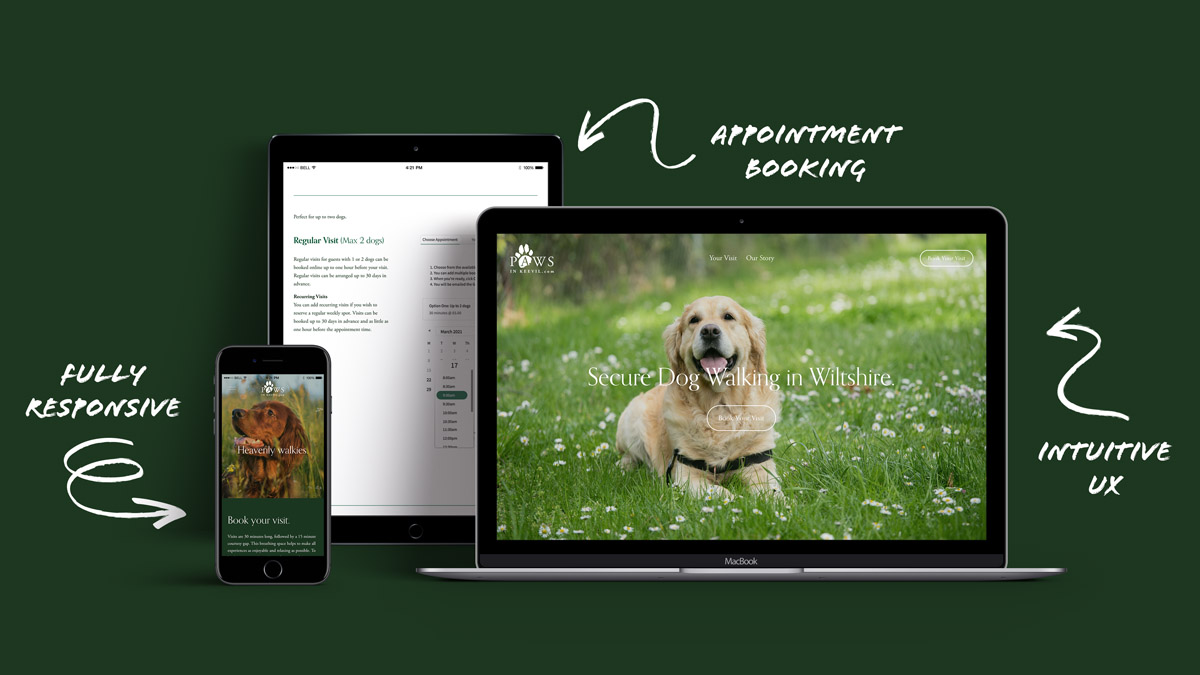
At osmil™ we're currently building a new website for a structural engineering consultancy, and this is front of mind throughout the project. Every page is written for both audiences, the human reading it and the machine parsing it. It changes how you approach copy, structure, and content. And it's entirely compatible with great design. You just have to build it in from the start.
What to do about it: a practical list
Write proper page titles and meta descriptions. Every page on your site needs a clear, descriptive title and a well-written meta description. These aren't just for humans. They're how crawlers, both traditional and AI, understand the purpose of each page.
Use heading structure correctly. H1 for your page title, H2 for main sections, H3 for subsections. This isn't just a design choice. It's how both search engines and AI tools understand the hierarchy and content of your pages.
Submit a clean sitemap and check your robots.txt. Make sure your site is being crawled. It sounds obvious, but it's surprisingly common for sites to have settings that accidentally limit crawler access.
Add schema markup to key pages. Schema is structured data that labels your content for machines. Organisation schema tells AI tools what your business is. LocalBusiness schema helps with geographic searches. FAQPage schema means questions and answers can be pulled directly into AI responses. It's a one-time investment that pays ongoing dividends.
Write with real depth. Thin copy is a liability. A service page that describes what you offer in two sentences gives AI nothing useful to work with. Explain what you do, how you approach it, who it's for, and what a good outcome looks like. Write for the questions your clients actually ask.
Build your EEAT signals. Experience, Expertise, Authoritativeness, Trustworthiness. Google's quality framework, and AI tools have broadly inherited it. Author bios, professional credentials, testimonials, case studies, and cited references all contribute. Keep content current and show when it was last updated.
Get your brand mentioned elsewhere. Reviews on Google Business Profile. Listings in relevant directories. Coverage in trade publications or local press. Mentions in articles or peer recommendations. AI tools cross-reference your presence across the web to evaluate your credibility. A business that only appears on its own website is a weak entity.
Keep your NAP data consistent. Name, address, phone number. These must be identical across your website, your Google Business Profile, and every directory listing you appear in. Inconsistency undermines trust signals with both humans and machines.
Claim and fully optimise your Google Business Profile. If you serve clients in a specific location, this is essential. Fill in every field. Add quality images. Keep hours accurate. Respond to reviews. Local AI search draws heavily on this data.
Create content worth citing. Generic keyword-optimised articles are increasingly invisible. What AI rewards, and what readers value, is content with genuine insight. A clear point of view. A useful framework. A case study that illustrates something real. Write things that are worth recommending.
Brand clarity as a technical asset
This is the part that doesn't get said often enough.
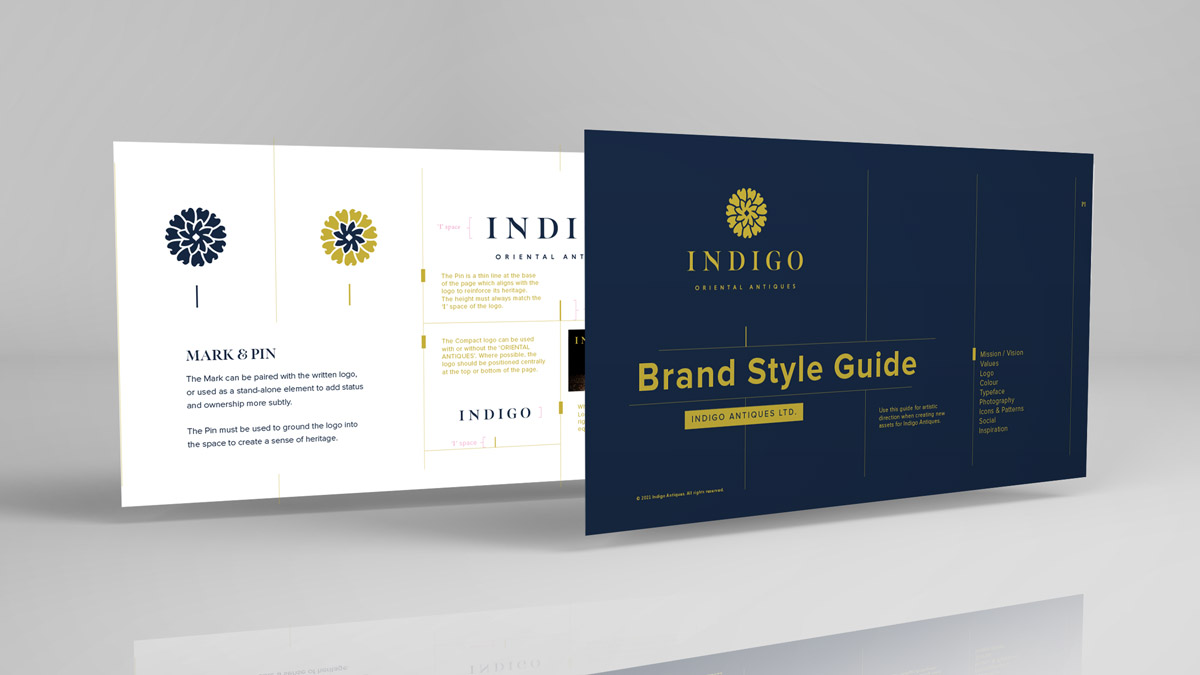
A strong, coherent brand isn't just a commercial advantage. It's increasingly a technical one. AI tools favour businesses that are consistently referenced, reviewed, and discussed across the web. A brand that shows up the same way everywhere, with consistent naming, positioning, and tone, builds a recognisable entity in the way these tools understand the world.
The best brands have always been consistent. That consistency, across identity, communication, and digital presence, now has a direct bearing on whether an AI tool surfaces you or skips past you. Brand clarity has become a citation signal. Which is a new way of saying something that has always been true.
The opportunity right now
Most businesses aren't doing this. That's not a criticism. It's simply where things are. The shift in AI search has moved quickly and the guidance hasn't kept pace. Which means the businesses that act now build a genuine, compounding advantage over those that wait.
The investment isn't extraordinary. A well-structured website with clear, substantive copy. A consistent brand presence across the web. Content that answers real questions properly. These are good business practices anyway. They just carry more weight than ever before.
At osmil™ we build for this from the start. Every website we design is structured with both audiences in mind, the person visiting and the machine reading. If your current site isn't doing this, we'd be glad to talk about what that means for you.