Founders often become the clearest expression of their business. They know why it began, where the difficult decisions were made and what makes the offer genuinely different. That knowledge is valuable. But when every proposal, presentation or website page needs the founder there to explain what it really means, the brand is still relying on one person to make it work.
A recent rebrand by Leeds studio Kiss Branding offers an interesting alternative. Creative Boom reported on 7 October that co-founders Poonam Saini Kilb and Matt Kilb defined the strategy, wrote it down, then handed the creative work to their team. The resulting identity was developed around the idea of “Brands that Kiss”, with a hand-drawn wordmark and a Cupid character. The founders still set the direction, but they gave their team room to interpret it.
It is one studio’s experience, so it does not prove that every founder should leave a rebrand to someone else. What it does show is how useful distance can be. If a strategy is clear enough for other people to make confident decisions from it, the business gains more than a new look. It gains a brand that can move without waiting for one person’s approval at every turn.
Founder instinct can become a bottleneck
In a growing business, a founder’s instinct often carries more information than anyone realises. They know which phrases feel wrong, which opportunities fit and what the company would never do. The trouble starts when those judgements stay as instinct. The team can follow the founder, but they cannot always repeat the reasoning when the founder is unavailable.
That shows up in everyday communications. A sales deck sounds different depending on who presents it. A proposal has to be rewritten because the usual template misses the point. The website says the right things, but a prospect only understands the value after speaking to the founder. These are communication gaps, and a useful brand should help close them.
A brand cannot repair a poor service or make a weak offer stronger. It can turn a good business into something people understand more quickly and represent more confidently. That includes the audience outside the business and the team within it.
Turn what you know into something others can use
The answer is not to remove the founder from the process. Their knowledge should shape the strategy. The useful shift is turning that knowledge into clear choices: who the business is for, what it promises, what evidence supports that promise, how it should sound and which parts of its character must remain recognisable.
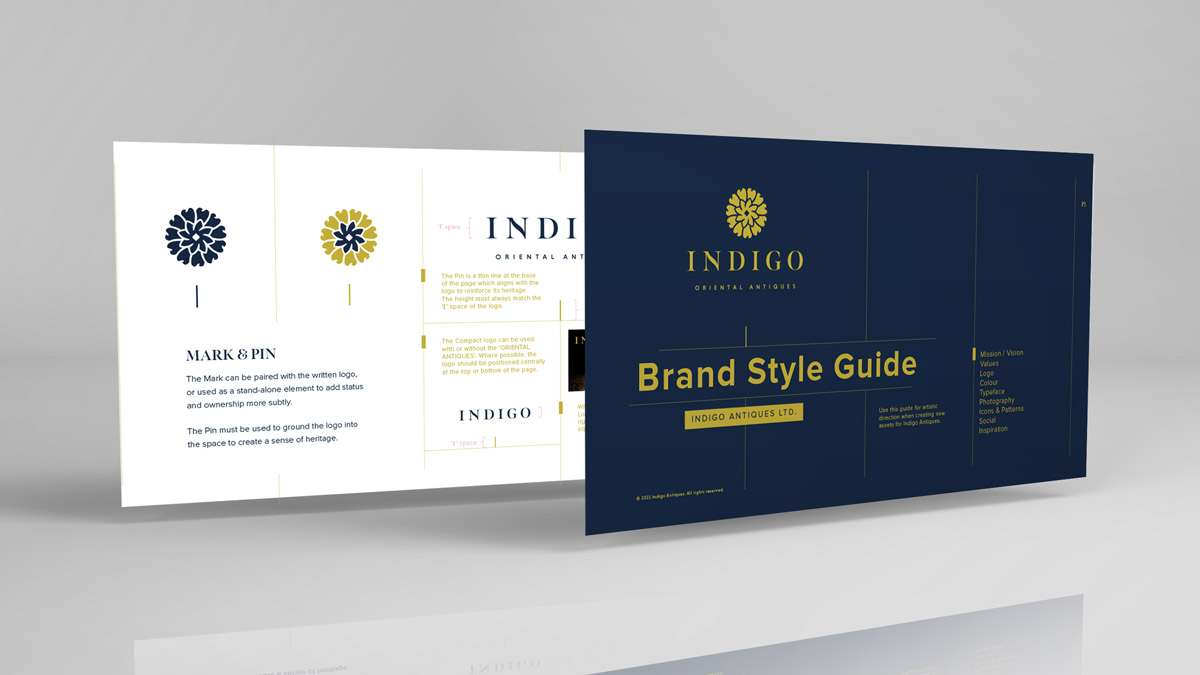
From there, the identity needs enough structure to create consistency and enough flexibility to let people do good work. A rigid rulebook can make every communication look obedient while saying very little. A loose collection of assets leaves the team guessing. The better system gives people principles, examples and practical tools they can apply to a website, a presentation or a conversation without starting again each time.
This is where questioning the usual approval process can help. If every decision returns to the same person, the brand may look consistent while the organisation becomes slower. Letting trusted people work from a clear brief tests whether the thinking is genuinely shared. Their questions can also reveal assumptions the founder has stopped noticing.
Stepping back is a useful test
A rebrand is one opportunity to test this, but the same principle applies to daily work. Could someone in the team explain the offer clearly without copying the founder’s words? Could they choose the right case study for a proposal, adapt a deck for a new audience or publish a useful page on the website with confidence? If not, the problem may be less about capability and more about the clarity of the system they have been given.
Our view is that a future-facing brand should make the business less dependent on any one person. It should preserve what makes the founder’s perspective valuable, then turn it into something the wider team can use and improve. That is not a founder becoming unimportant. It is a sign that their thinking has become part of the business.
For founders ready to make that shift, osmil’s branding work is designed to create clear, practical systems that teams can use with confidence. Let’s talk about what your business needs next.
Story reference: Tom May, Creative Boom, 7 October 2026. See Kiss Branding’s current identity. Analysis and recommendations are osmil’s perspective. Cover image is an AI-generated editorial illustration, not an image of the reported project.